%20(Instagram%20Post%20(Square))%20(Logo)%20(1).png)


July 30 – Beyond the Surface: The True Nature of Creativity
- Anna Klinman
- Jul 30, 2025
- 4 min read

“You can’t use up creativity. The more you use, the more you have.” Maya Angelou

Creativity, a term mentioned with increasing frequency in our modern vocabulary, often evokes images of artistic expression or groundbreaking inventions. However, as Rick Rubin eloquently states in The Creative Act, creativity is far more universal. It is not a specialized skill reserved for a select few, but a fundamental aspect of the human experience.
Rubin posits that creativity is less an action and more a state of being. It's a lens through which we view the world, a filter that colors our perceptions and influences our interactions. From the mundane act of finding a new route to work to the groundbreaking discovery of a scientific principle, creativity is the catalyst for innovation and progress.
Contrary to popular belief, creativity is not a rare or elusive talent. Rubin asserts, “Creativity is not a rare ability. It is not difficult to access. Creativity is a fundamental aspect of being human. It’s our birthright. And it’s for all of us.” In essence, the capacity for creative thought is inherent in every individual.
At its core, creativity is about generating new ideas, forging novel connections, and challenging the status quo. It's the spark that ignites imagination, propelling us beyond the confines of conventional thinking. As Rubin describes, "This epiphany is the heart of creativity. It’s something we feel in our whole body." This visceral experience, often accompanied by a surge of excitement or a moment of clarity, marks the birth of a creative idea.
While creativity is often associated with complexity, Rubin offers a counterintuitive perspective. "Making the simple complicated is commonplace. Making the complicated simple, that’s creativity." This suggests that true creativity lies not in embellishment or obfuscation, but in clarity and efficiency. It’s about distilling complex ideas into understandable and accessible forms.
To fully grasp the nature of creativity, it is essential to distinguish it from intelligence. Intelligence is undoubtedly valuable, enabling us to process information, solve problems, and make decisions. However, creativity transcends mere intellect. It involves intuition, emotion, and a willingness to explore unconventional paths.
While humans have long celebrated the power of the mind, the advent of artificial intelligence (AI) has introduced a new dimension to conversation. Machines can process vast amounts of data, identify patterns, and even generate novel solutions with astonishing speed and accuracy. However, can they truly be considered creative?
At the heart of creativity lies a unique blend of intuition, emotion, and imagination. These qualities, deeply rooted in human consciousness, are yet to be replicated by AI. While machines can mimic certain aspects of creative processes, they lack the capacity for genuine originality and the ability to transcend the parameters of their programming.
“The notes I handle no better than many pianists. But the pauses between the notes, ah, that is where the art resides.” Artur Schnabel

Consider the composition of music. AI can analyze countless pieces, identify patterns, and even generate melodies that adhere to established musical structures. However, it struggles to imbue these compositions with the emotional depth, cultural context, or personal expression that defines truly great music.
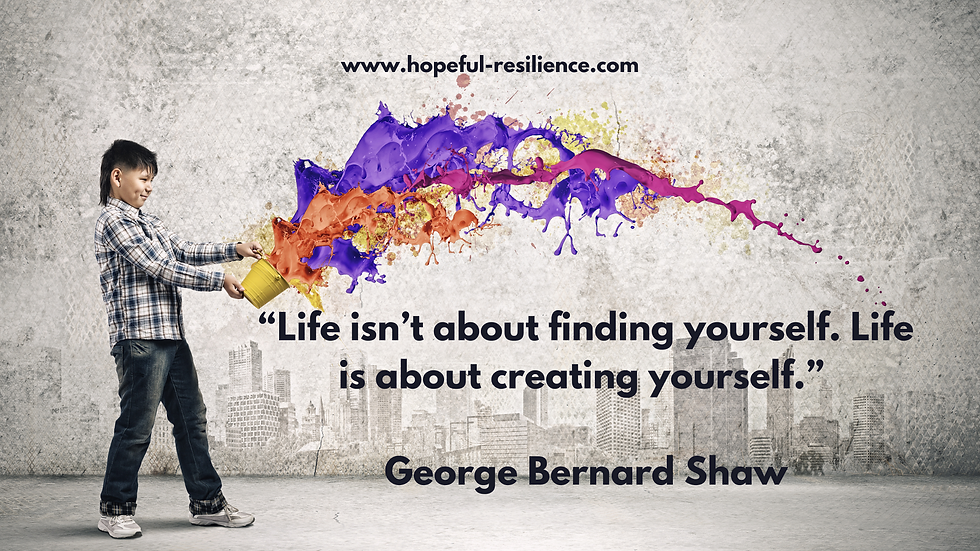
“Life isn’t about finding yourself. Life is about creating yourself.” George Bernard Shaw
Similarly, in the realm of visual arts, AI can create impressive images based on given prompts. Yet, these images often lack the nuance, symbolism, and storytelling that characterize human-created art. AI may be able to generate technically proficient works, but it cannot replicate the human experience and the complexities of human thought that underpin true artistic expression.
In essence, while AI is a powerful tool that can augment human creativity, it cannot replace it. The human mind, with its capacity for empathy, curiosity, and a deep understanding of the world, remains the ultimate source of original thought and innovation.
To truly comprehend the nature of creativity, it is essential to explore the intricacies of the human brain. While the exact mechanisms underlying creative thought remain a subject of ongoing research, neuroscientists have made significant strides in unraveling the neural correlates of this complex process.
At the core of creativity lies the ability to make novel connections between disparate ideas. This process, often referred to as divergent thinking, involves activating multiple brain regions simultaneously. Studies have shown that areas associated with memory, attention, and language interact with those responsible for emotion and imagination to foster creative insights.
Furthermore, the role of intuition in creativity cannot be overstated. While often dismissed as mere gut feeling, intuition is a powerful cognitive tool that taps into vast reservoirs of implicit knowledge and experience. Research suggests that the brain's limbic system, responsible for emotions and memory, plays a crucial role in intuitive decision-making and creative problem-solving.
Emotional intelligence, the capacity to understand and manage one's own emotions as well as those of others, is another key component of creativity. Emotions provide the energy and motivation that drive creative exploration. They also influence our perception of the world and the way we interpret information.
Creativity is a multifaceted phenomenon that emerges from the intricate interplay of various brain regions. By understanding the neural underpinnings of creative thought, we can gain valuable insights into how to cultivate and enhance our creative potential.
This week, we will delve deeper into the various forms creativity takes, from the arts and sciences to everyday life. We will examine the role of culture, society, and technology in shaping our creative potential. And we will explore strategies for cultivating and nurturing our innate creativity.
Activity –
Perspective Shifting: Try to see things from a different point of view, such as that of a child or an alien.
My book, Nurturing Hopeful Resilience, guides parents and caregivers through the challenges of raising children in a technology-driven age. It explores the importance of instilling strong values in children from a young age to help them develop into compassionate, responsible, and fulfilled individuals.
Through a series of practical exercises and insightful reflections, this book delves into fourteen core values: curiosity, awareness, kindness, learning, self-awareness, fairness, playfulness, compassion, service, belonging, trustworthiness, authenticity, community, and responsibility. Understanding and nurturing these values can empower our children to thrive in a complex and ever-changing world.
This book offers a roadmap for raising children who are academically successful, emotionally intelligent, socially adept, and morally grounded. It encourages readers to prioritize human connection, empathy, and compassion over material possessions and fleeting digital distractions. By embracing the power of values, we can create a brighter future for ourselves and generations to come.


Comments